Aluminum vs. iron railings is a question many New Jersey homeowners face when replacing an old railing or planning a new deck, porch, staircase, balcony, or entrance. Both materials can look great and provide a durable railing system, but they have very different characteristics.
Some homeowners want something clean and low-maintenance. Others prefer the weight, character, and traditional appearance of a custom iron railing. The right choice usually comes down to where the railing will be installed, the look you want, and how much maintenance you are willing to put into it over the years.
In this guide, we’ll look at the practical differences between aluminum and iron railings so you can make a more informed decision for your home.
If you’re already planning a railing project, you can also explore Master Pro Railing’s railing services in New Jersey to see the types of residential railing projects we handle.
Aluminum vs. Iron Railings: What’s the Difference?
At first glance, both types of railing can serve the same purpose. They provide a safe handrail or guard around stairs, porches, decks, balconies, and other areas of a property.
The difference becomes more noticeable when you look at the material itself.
| Consideration | Aluminum Railings | Iron Railings |
|---|---|---|
| Appearance | Clean, simple, and versatile | Traditional, substantial, and decorative |
| Maintenance | Generally low maintenance | May require more attention to the protective finish |
| Weight | Lightweight | Heavier |
| Outdoor applications | Well suited to exterior projects | Suitable when properly finished and maintained |
| Design options | Many modern and traditional configurations | Excellent for custom and ornamental designs |
| Best fit | Homeowners prioritizing low maintenance and a clean appearance | Homeowners looking for a more traditional or custom metal appearance |
There isn’t one material that works best for every house. Your property’s architecture, the location of the railing, and your personal preferences all matter.
Why Choose Aluminum Railings?
Aluminum has become a popular choice for homeowners who want an attractive railing without spending a lot of time maintaining it.
It’s particularly common on decks, porches, exterior stairs, balconies, and other areas exposed to the weather.
Low maintenance
One of the biggest advantages of aluminum is that it doesn’t rust in the same way iron does. That’s important for an outdoor railing that has to deal with rain, snow, humidity, and temperature changes throughout the year.
For a homeowner who doesn’t want to spend a lot of time repainting or maintaining an exterior railing, aluminum can be an appealing option.
A clean, modern look
Aluminum railings work especially well with homes that have a modern or simple exterior design. Straight lines and relatively slim components can provide the safety and separation you need without making a deck or porch feel visually heavy.
That doesn’t mean aluminum is limited to modern homes. The right profile, layout, and finish can also work well with more traditional properties.
Lightweight construction
Aluminum is considerably lighter than iron. That can be useful during fabrication and installation, particularly when working around an existing deck, porch, staircase, or elevated area.
A practical option for New Jersey weather
Outdoor railings in New Jersey have to deal with four seasons. Rain, snow, humidity, and temperature changes can all affect exterior metalwork.
Aluminum is worth considering when reducing corrosion-related maintenance is one of your priorities.
Why Choose Iron Railings?
Iron has a completely different character.
For some homeowners, that’s exactly the point.
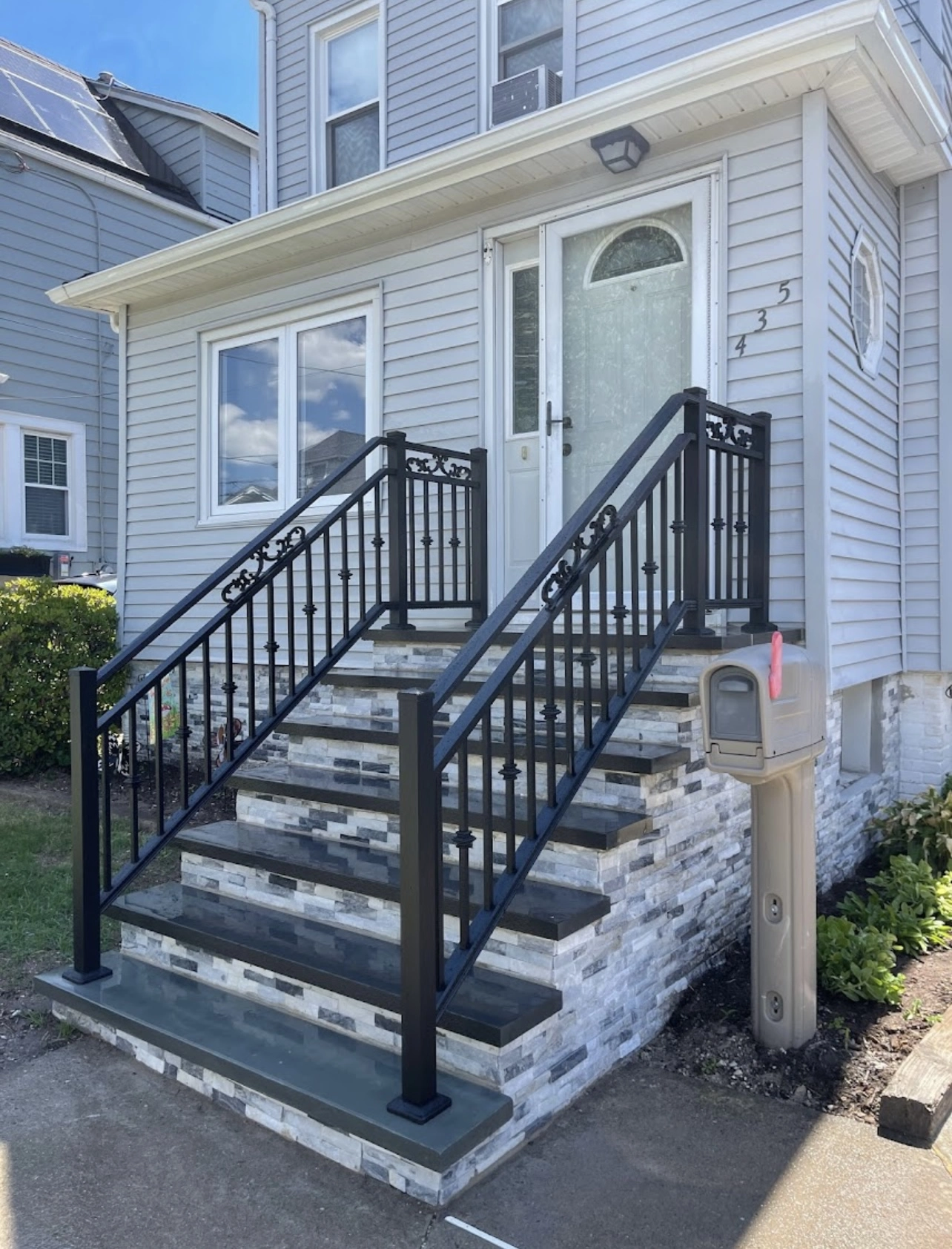
An iron railing can become part of the architecture of the house instead of simply being a functional barrier. It can add weight, detail, and a traditional appearance to a front entrance, staircase, porch, or balcony.
Classic appearance
Iron railings have been used in residential architecture for generations. Simple vertical designs can look clean and understated, while decorative patterns can create a much more traditional appearance.
Iron can work particularly well with brick, stone, traditional siding, and older homes where a modern aluminum railing might feel out of place.
Custom design possibilities
One of the biggest reasons homeowners choose iron is customization.
A custom railing can be designed around the actual staircase, landing, porch, or entrance rather than trying to make a standard-size railing fit the space.
Depending on the project, that can include different picket arrangements, curves, decorative details, handrail profiles, and other design elements.
If you’re specifically interested in traditional iron styles, our guide to wrought iron railings in New Jersey goes into more detail about the style and applications of this type of railing.
A substantial feel
Iron has more visual and physical weight than aluminum. For some properties, that is an advantage.
A substantial iron railing can make an entrance or staircase feel more established and architectural, especially when the railing is designed to complement the surrounding materials.
Aluminum vs. Iron Railings for Outdoor Use
This is where the New Jersey climate becomes an important part of the conversation.
An outdoor railing isn’t sitting in a showroom. It’s exposed to whatever the weather brings throughout the year.
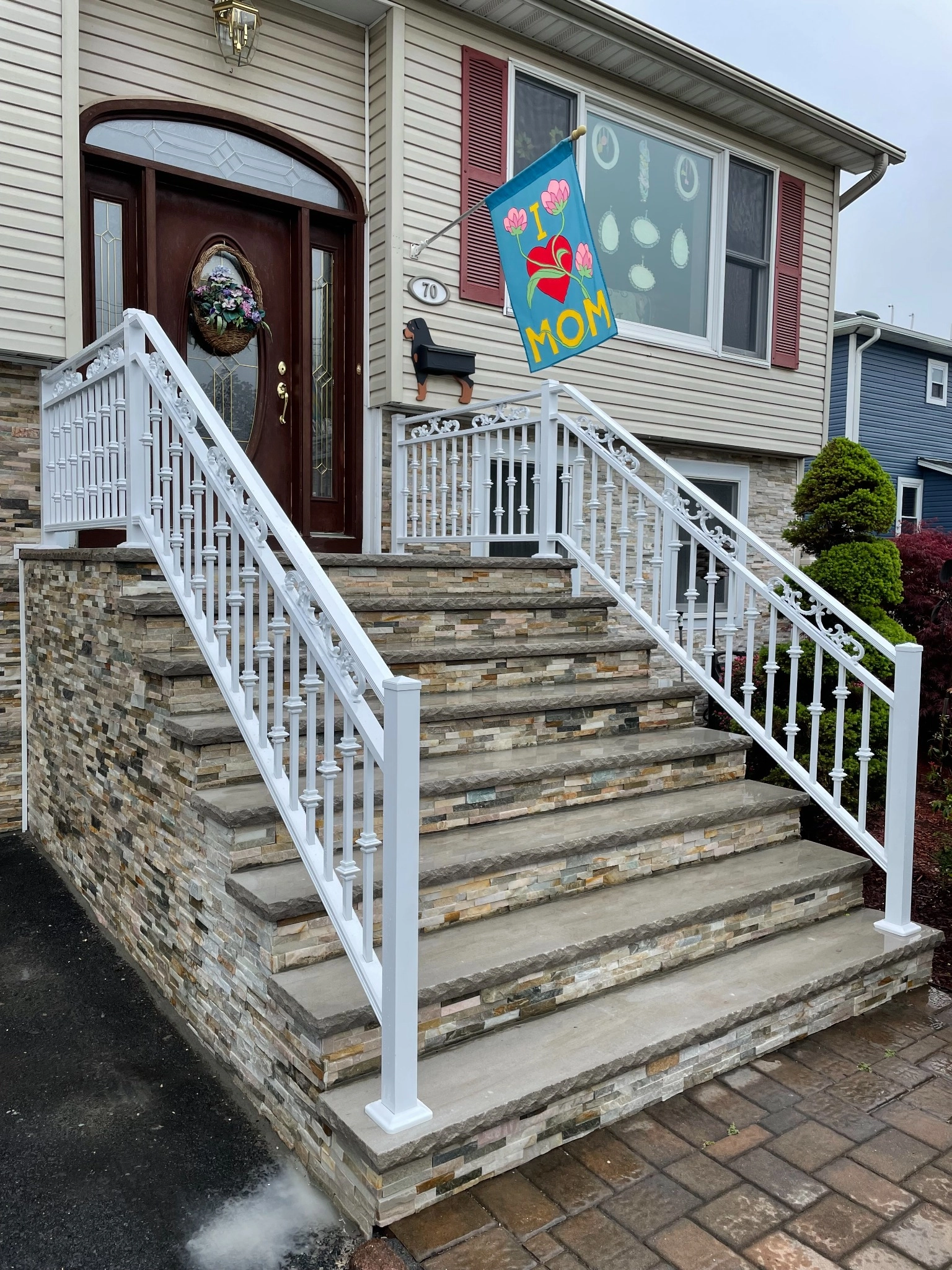
Aluminum is naturally resistant to corrosion and is often chosen for exterior projects where homeowners want relatively little maintenance.
Iron can also be used outdoors, but the protective finish becomes much more important. If that finish is damaged or begins to deteriorate, the exposed metal needs to be addressed.
That doesn’t automatically make iron the wrong choice for an outdoor project. It simply means that maintenance should be part of the decision from the beginning.
When comparing outdoor railing materials, think about:
- How exposed the railing will be to rain and snow
- Whether the property is close to roads where salt may be present
- How much maintenance you want to do
- How the railing should look next to the house
- Whether the railing is replacing an existing system
- How the railing will be attached to the existing structure
Which Is Better for a Deck or Porch?
Both aluminum and iron can work well on a deck or porch. The better choice depends on the style of the property and what you want from the railing.
For a homeowner who wants a simple, clean appearance and minimal maintenance, an aluminum porch or deck railing can make a lot of sense.
For a home where the railing is intended to be a more noticeable architectural feature, custom iron may be a better fit.
There’s also the question of how much of the surrounding space you want the railing to visually occupy. A slimmer aluminum design can help maintain an open feeling around a deck, while a heavier iron design can create a stronger visual boundary.
If you’re planning a patio or outdoor living area, our guide to patio railing ideas for New Jersey homes covers additional design considerations and railing options.
Aluminum vs. Iron for Stair Railings
Stair railings have to do more than look good. They need to follow the shape of the staircase, provide a comfortable handrail, and be securely installed.
For exterior stairs, aluminum can be a practical choice because of its resistance to corrosion and relatively low maintenance requirements.
For interior stairs, iron can create a strong design feature. It works particularly well with wood stairs, stone, tile, and traditional interior finishes.
But the material is only one part of the decision. The design of the railing should also take into account the width and layout of the staircase, the surrounding walls, the landing, and the way people will actually use the stairs.
Maintenance: What Should You Expect?
Maintenance is one of the biggest differences between aluminum and iron.
Aluminum is generally chosen by homeowners who want to keep ongoing maintenance to a minimum. It can be particularly convenient for outdoor railings because it doesn’t develop rust in the same manner as iron.
Iron requires more attention to its protective finish. Exterior iron railings should be inspected periodically, especially after harsh weather or if the finish has been scratched or damaged.
Regardless of the material, good installation matters. Proper attachment, suitable finishing, and dealing with water or drainage issues around the installation can all help a railing perform better over time.
Which Railing Looks Better?
This is probably the most subjective part of the decision.
Aluminum tends to work well when you want a railing that looks clean and doesn’t dominate the space. It can blend naturally with modern homes, contemporary decks, and simple exterior designs.
Iron tends to attract more attention. It can provide a traditional, custom appearance and can be used to introduce decorative details into an otherwise simple entrance or staircase.
Instead of asking which material looks better, ask which one looks better on your house.
Look at the siding, brick, stone, doors, windows, stairs, deck boards, and other metal elements already present. The railing should feel like part of the property rather than something added afterward.
Custom Railing Design Matters
A good railing installation isn’t simply about choosing aluminum or iron from a list.
The dimensions and layout of the property matter just as much.
A staircase may have an unusual angle. A porch may have multiple sections. A deck may need a railing around several corners. An entrance may require a custom configuration to work with existing masonry.
That’s where custom fabrication can make a difference.
Instead of forcing a standard product into an unusual space, the railing can be designed around the actual measurements and requirements of the project.
Master Pro Railing provides custom railing solutions throughout New Jersey, including aluminum, metal, porch, deck, stair, indoor, and outdoor railing projects.
New Jersey Railing Requirements
Before replacing or installing a railing, it’s worth checking the requirements that apply to your particular project.
New Jersey’s Department of Community Affairs maintains the state’s current construction codes and adopted model codes. You can review the current New Jersey construction code requirements directly through the Department of Community Affairs.
The requirements that apply can depend on the type of property, the location of the railing, the height of the walking surface, the stair configuration, and the scope of the work.
For that reason, homeowners shouldn’t assume that a railing used on one property will automatically meet the requirements for another. The actual installation should be evaluated based on the project and applicable local requirements.
For broader information about New Jersey’s building regulations, the New Jersey Codes and Regulations resources provide additional information from the state’s Department of Community Affairs.
So, Should You Choose Aluminum or Iron?
It comes down to what matters most to you.
Aluminum may make sense if you want:
- Low ongoing maintenance
- A clean and relatively lightweight railing
- A practical option for exterior applications
- A modern or understated appearance
- A railing that can handle outdoor exposure with minimal upkeep
Iron may make sense if you want:
- A traditional or architectural appearance
- A heavier, more substantial feel
- Custom decorative details
- A railing that becomes a noticeable design feature
- A style that complements brick, stone, or traditional architecture
Neither option is automatically the right answer. The best choice is the one that fits the location, architecture, maintenance expectations, and design of your particular project.
See Railing Designs From Real Projects
Sometimes it’s easier to make a decision when you can see how different railing styles look in actual installations. Browse the Master Pro Railing outdoor railing gallery to see examples of railing designs for decks, porches, stairs, balconies, and other exterior spaces.
Why Work With Master Pro Railing?
Choosing the material is only the beginning. Measurements, fabrication, attachment, finish, and installation all affect how the finished railing looks and performs.
Master Pro Railing works with homeowners throughout New Jersey on custom railing projects, from straightforward replacements to more involved stair, porch, deck, entrance, and balcony installations.
If you’re still deciding between aluminum and iron, we can look at the space, discuss the design you’re after, and help you understand which options make sense for the project.
Ready to Plan Your Railing Project?
Whether you’re replacing an old railing, upgrading your porch, finishing a new deck, or building a custom staircase, Master Pro Railing can help you plan the right railing for your property.
Call Master Pro Railing at (973) 878-6062 to discuss your project and request a free estimate.
Frequently Asked Questions
Are aluminum railings better than iron railings?
It depends on the project. Aluminum is often chosen for low-maintenance outdoor applications, while iron is popular when homeowners want a more traditional, substantial, or decorative appearance.
Are aluminum railings good for outdoor use?
Yes. Aluminum is commonly used for outdoor decks, porches, stairs, balconies, and other exterior railing applications because it is resistant to corrosion and generally requires relatively little maintenance.
Are iron railings suitable for outdoor use?
Yes. Iron can be used outdoors when it is properly fabricated, protected, installed, and maintained. The condition of the protective finish is particularly important for exterior applications.
Which requires less maintenance, aluminum or iron?
Aluminum generally requires less maintenance. Iron railings may require periodic inspection and maintenance of their protective finish, particularly when they are exposed to the weather.
Can aluminum be used for stair railings?
Yes. Aluminum can be used for both indoor and outdoor stair railings, provided the design and installation meet the requirements that apply to the project.
Can iron railings be customized?
Yes. Custom iron railings can be designed around the dimensions and style of a particular staircase, porch, entrance, balcony, or other area.
How do I decide between aluminum and iron?
Start with the location, architectural style, desired appearance, maintenance expectations, weather exposure, and project requirements. A professional railing contractor can also evaluate the space and help you compare practical options.
How can I get a railing estimate in New Jersey?
Contact Master Pro Railing at (973) 878-6062 to discuss your project and request a free estimate.